

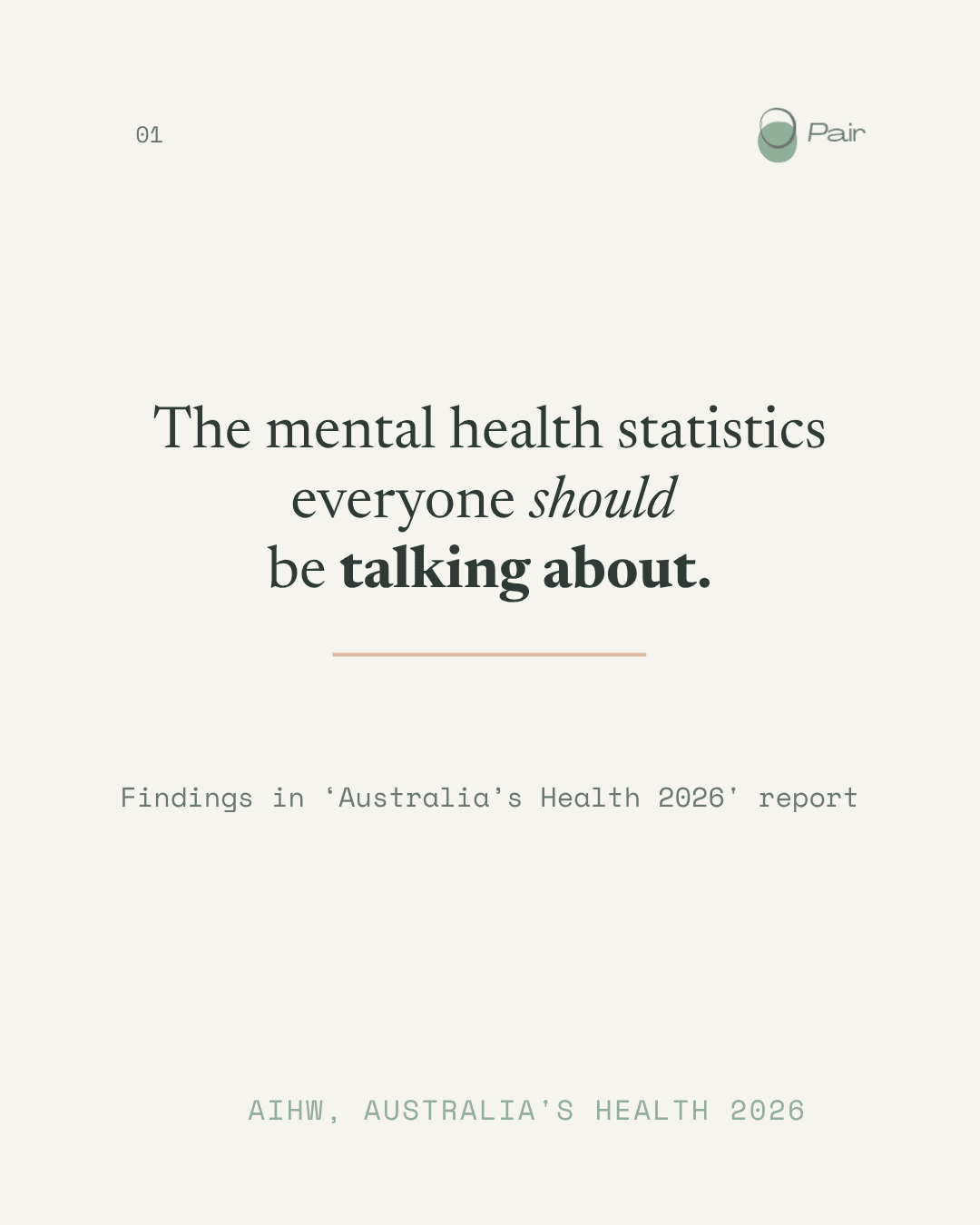
Mental Health in Australia: The 2026 Statistics Worth Talking About
The Australian Institute of Health and Welfare (AIHW) recently released their Australia's Health Report for 2026. These are the key findings that offer insights into the country's health and wellbeing, and they highlight some interesting and concerning trends occuring in Australian's mental health. Below I have chosen some statistics worth discussing, however before we delve deeper, I want to emphasise why it is so important to understand these statistics, and that is: behind every fact or figure, is a person. As a former clinician and a researcher, I have had to remind myself of this many many times. Whilst, a number on a page can feel cold, clinical and distant, these national figures tell a story that a lot of people, maybe even yourself, will quietly recognise. It is sobering to realise that your best mate who you haven't heard from for a few weeks is one of the 1 in 5 Australians who experienced a mental health disorder in the past year, and are currently struggling with depression; or that your co-worker who is usually really bubbly is one of the many millions of young people in Australia struggling with their mental health. It may also be reassuring that if you have been struggling, you are not alone, and many others like you are seeking, and finding, the help that they need. So remember, these numbers may read like figures on a page, but they could refer to you, your loved ones, or one of the many people you pass on the street every day. So with that being said, here is what the findings from the AIHW's 2026 report say, and what they might mean for you.
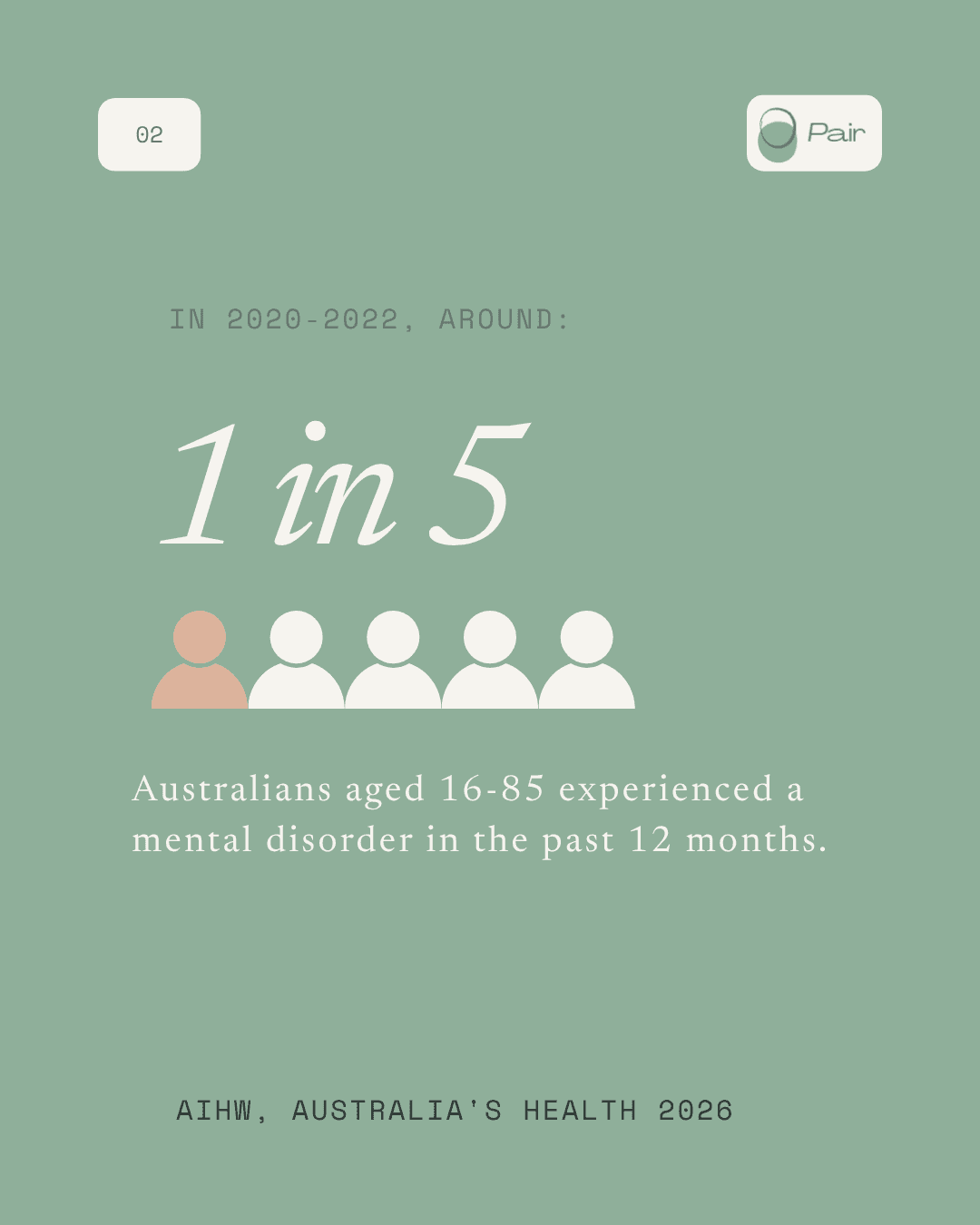
Around 1 in 5 Australians experienced a mental disorder last year
In 2020 to 2022, around 1 in 5 Australians aged 16 to 85, roughly 22 percent, had experienced a mental disorder in the previous 12 months. That was higher among women, at about 25 percent, than men, at about 18 percent.
One in five is not a rare event. It could be the person next to you on the tram, a colleague, a friend, maybe you. Anxiety and depression are among the most common experiences, and they touch people across every age, background, and postcode.
If you take one thing from this figure, I hope it is this: struggling with your mental health is not unusual, and it is not a personal failing. It is a very common part of being human.
Mental health challenges among young people are rising
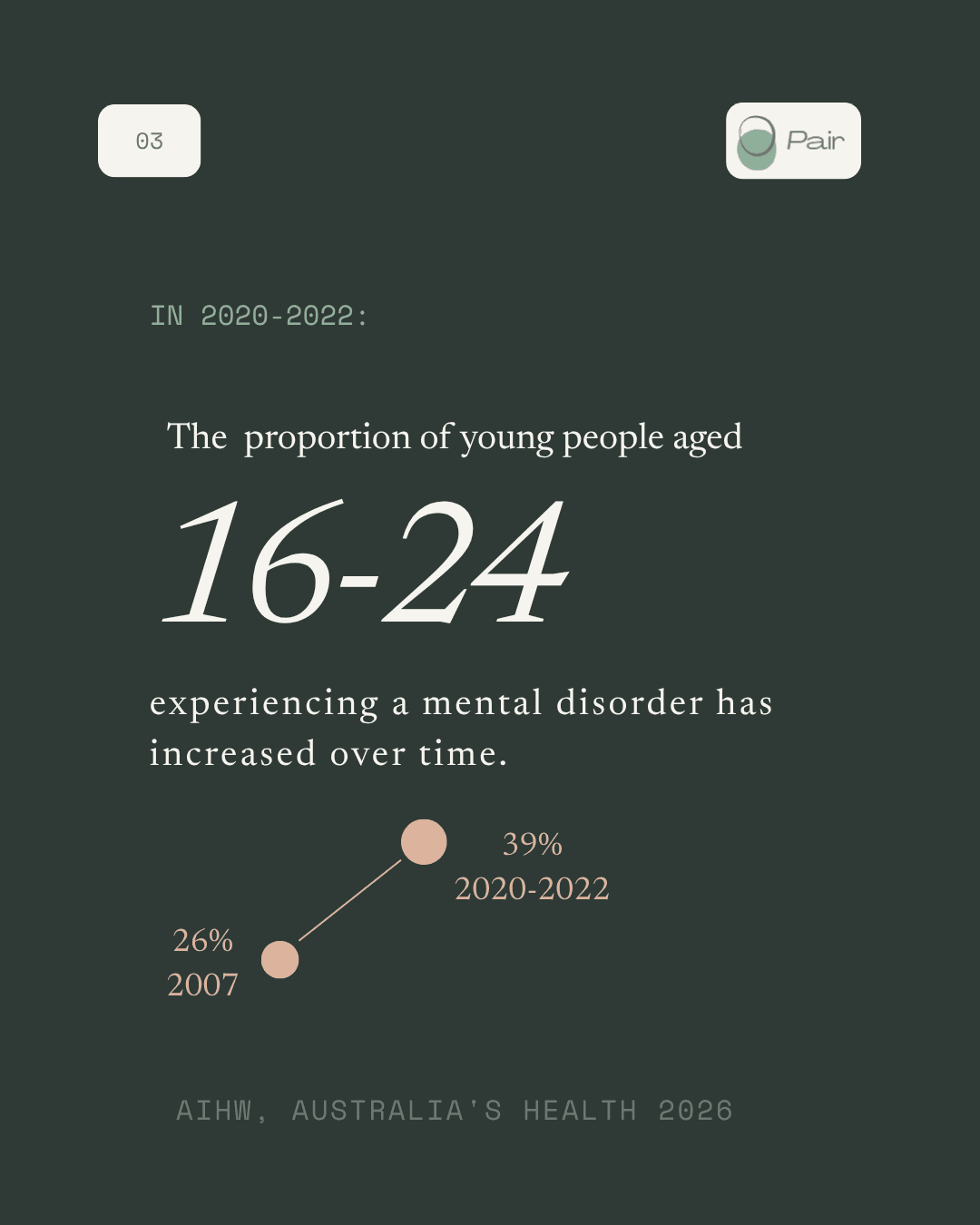
While the overall rate has stayed fairly stable, the picture for young people has not. Among Australians aged 16 to 24, the proportion experiencing a mental disorder rose from 26 percent in 2007 to 39 percent in 2020 to 2022.
That is a significant shift in less than two decades, and there is no single, tidy explanation about why. Some mental health organisations like Orygen, point to global mega-trends such as growing pressures, from study and cost of living, to global warming, and to an increasingly always-on digital world. Additionally, greater awareness means more young people recognise what they are feeling and are willing to name it.
Whatever the mix of reasons, the takeaway for any young person reading this is: if things feel harder than they look for everyone else, the numbers suggest that this is not the case, that you and many of your peers are in the same boat, and that support is worth seeking sooner rather than later.
More Australians are reaching out for help
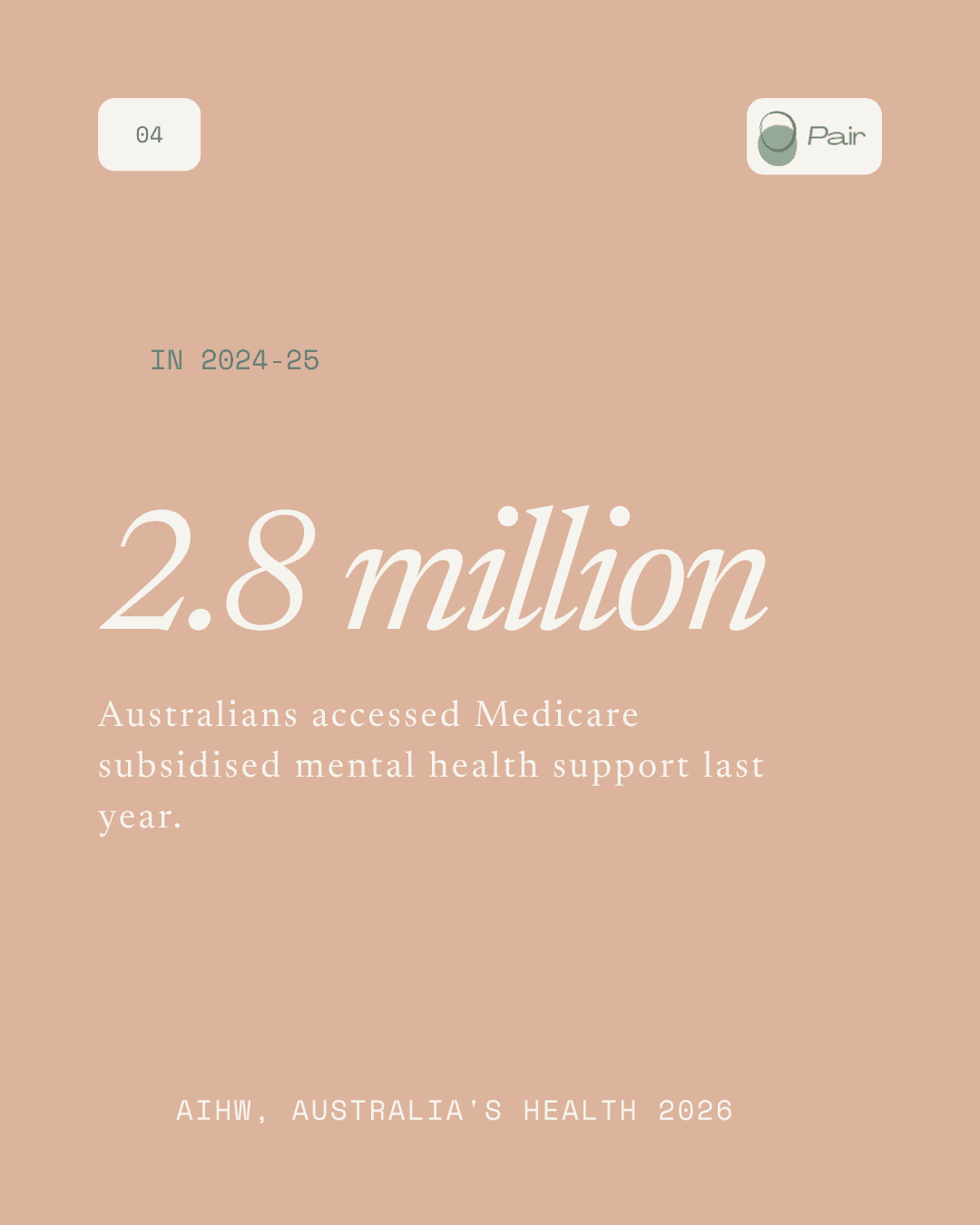
Here is a more hopeful figure. In 2024 to 2025, about 1 in 10 Australians, some 2.8 million people, accessed Medicare-subsidised mental health support.
More people reaching out is a positive thing. It suggests that talking about mental health is becoming normalised, and that the shame that once kept people silent is slowly disappearing. Every one of those 2.8 million made the same decision you might be weighing up right now, and decided their wellbeing was worth it.
It is also a reminder that help is available and accessible. Support through Medicare, usually starting with a chat to your GP, brings the cost of seeing a psychologist within reach for many people (you can find details about how to access this here)
Young women are leading the rise in help-seeking
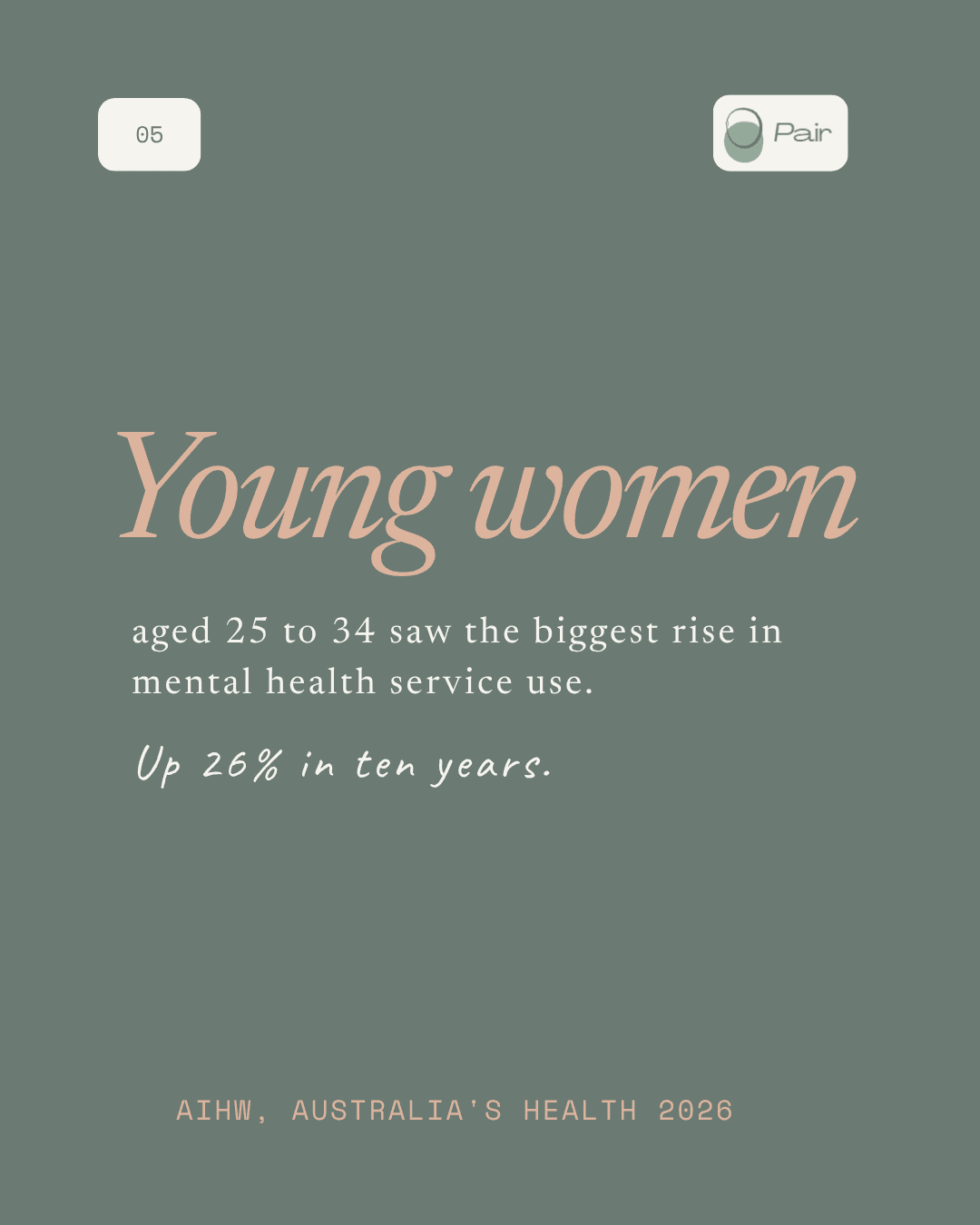
Young adults are the group most likely to use mental health services, and that rise has been led largely by women. Among young women in particular, service use has climbed noticeably over the past decade.
This is not simply a story about more distress, it also reflects a generation more willing to ask for help, to talk openly with friends, and to treat mental health as seriously as physical health. That cultural shift is something to be proud of, even as it points to real need.
You are more than a statistic
Statistics are useful for understanding the shape of a problem across millions of people. They are far less useful at describing your worries or the specific weight you might be carrying.
So if you see yourself somewhere in these numbers, what you are feeling is common, it is valid, and it does not have to be faced alone.
You do not need to be at breaking point to reach out. If mental health has been weighing on you, a good first step is a conversation with your GP, who can talk through your options and, if it suits, prepare a mental health care plan for Medicare-subsidised sessions.
When you are ready to find a psychologist, Pair Psychology matches you with AHPRA-verified psychologists based on what matters for a good fit. It is free to get matched.
Source: